
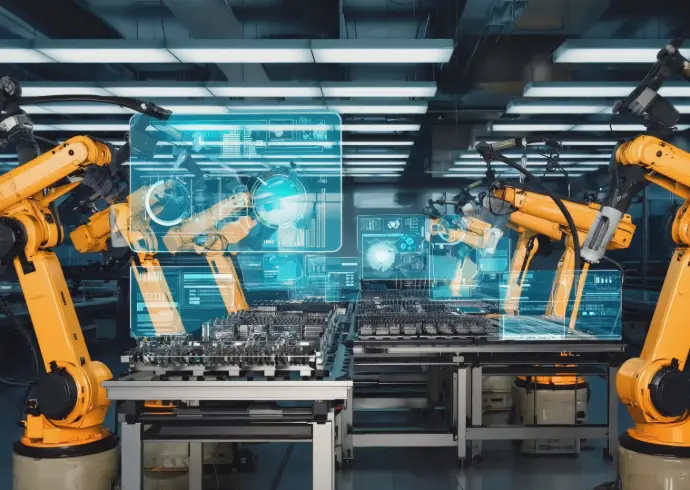
Manufacturing System Integration for ERP, MES, PLM and SCADA
System integration means connecting your factory-floor systems, business applications, and engineering tools so data flows seamlessly — eliminating manual handoffs and data silos. We help manufacturers bridge this gap, and solve these challenges.
The Integration Challenge
Most manufacturers run dozens of disconnected systems — ERP, MES, PLM, SCADA, quality, and maintenance tools that don't talk to each other. The result: duplicated data, manual rekeying, and decisions based on outdated information.
Data Silos
Of manufacturers report data silos as their biggest barrier to digital transformation — Make UK Reports
Annual Rekeying Cost
Average annual cost per mid-size UK manufacturer of manual data re-entry between disconnected systems — IDC
Integration Failures
Of manufacturing IT integration projects fail to meet their original objectives — Gartner
What We Deliver
We design and implement integration architectures that connect your critical systems — so data flows once, accurately, in real time.

IT / OT Connectivity
Bridge the gap between factory-floor OT systems (PLCs, SCADA, HMI) and business IT systems (ERP, MES, PLM) using industrial protocols.
-
 OPC-UA and MQTT protocol implementation
-
Real-time data exchange between shop floor and business systems
-
Edge computing for local processing and latency reduction

MES-ERP Integration
Connect manufacturing execution to enterprise planning for real-time production visibility, accurate costing, and automated reporting.
-
Bi-directional data flow between MES and ERP
-
Automated production reporting and order tracking
-
Real-time inventory and work-in-progress visibility

API Middleware & Data Architecture
Design a scalable integration layer using modern API middleware, message brokers, and data lake patterns.
-
RESTful API and message broker design
-
Master data management and governance
-
Scalable architecture for future system additions
How We Work
A structured methodology to connect your systems without disrupting operations.

System Mapping
Map your current system landscape, data flows, and integration points. Identify gaps, redundancies, and quick wins.

Architecture Design
Design a target integration architecture with the right protocols, middleware, and data governance standards.

Phased Integration
Implement integrations in phases — starting with highest-value connections to deliver ROI early while minimising risk.

Validate & Test
Validate data accuracy, set up monitoring dashboards, and establish ongoing governance for data quality.
What You'll Achieve
-
 New revenue streams from connected products and services
 -
Elimination of manual data re-entry and associated errors
-
Real-time dashboards connecting shop floor to boardroom
-
Faster onboarding of new systems, sites, and partners
-
Reduced IT maintenance burden through standardised interfaces
-
Future-ready architecture supporting AI, IoT, and cloud adoption
Related Resources


Ready to Connect Your Systems?
Schedule a free consultation to discuss your integration landscape and build a roadmap to unified, real-time manufacturing data.